Google has replaced its Nexus smartphone lineup with the Pixel series. This change happened back in 2016 when the first two Google Pixel smartphones arrived. With this change, Google more or less indicated that it’s done making affordable flagship-grade phones aimed at developers and enthusiasts and that it wants to bring its smartphone creations closer to regular consumers.
This managed to disappoint quite a few people who loved the company’s Nexus line, but they had to make their peace with it and move on. Since the first two Pixels, Google announced a number of new ones (including some mid-range ones), and we’re here to take a closer look at all of them, basically, as we’re here to take a walk down memory lane if you will. Do keep note that new Pixel phones will be added to the list as they arrive, which includes both flagship and non-flagship devices, in this case.
- Google Pixel & Pixel XL
- Google Pixel 2 & 2 XL
- Google Pixel 3 & 3 XL
- Google Pixel 3a & 3a XL
- Google Pixel 4 & 4 XL
- Google Pixel 4a & 4a 5G
- Google Pixel 5
- Google Pixel 6 & 6 Pro
- Google Pixel 6a
- Google Pixel 7 & 7 Pro
- Google Pixel 7a
- Google Pixel Fold
- Google Pixel 8 & 8 Pro
- Google Pixel 8a
- Google Pixel 9 series
- Google Pixel 9a
- Google Pixel 10 series
Google Pixel & Pixel XL

Google Pixel and Pixel XL
Google announced two phones as part of the Google Pixel lineup back in October 2016, the Google Pixel and Pixel XL. These are the first two Pixel phones the company ever announced. They offer a considerably different design than any Nexus device the company introduced up to that point. The two phones look identical, but they are different in terms of size.
The Google Pixel and Pixel XL are made out of metal and glass. Most of the back of these two phones is covered by metal, but the upper portion has a glass plate applied to it. The bezels on the two phones are quite thick, even for the time period they were released in, and their design is nothing spectacular, but it did stand out back then. Both phones originally shipped with Android 7.1 Nougat .
The Snapdragon 821 fuels both phones
These two devices are both fueled by the Snapdragon 821 64-bit quad-core processor, while both of them include 4GB of RAM, and come in 32GB and 128GB storage flavors. Neither of them offers storage expansion, and a 12.3-megapixel camera is included on the back of both devices and was considered to be amongst the best in the class back then. Both devices are splash and dust-resistant, and they include an 8-megapixel front-facing camera.
The Google Pixel features a 5-inch fullHD display, while the Pixel XL has a 5.5-inch QHD panel. Both of those displays offer a 16:9 display aspect ratio, and both utilize AMOLED panels. The Google Pixel includes a 2,770mAh battery, while the Pixel XL packs in a 3,450mAh unit, and both support 18W fast wired charging.
Google Pixel 2 & 2 XL

Google Pixel 2 and Pixel 2 XL
The Google Pixel 2 and Pixel 2 XL were introduced back in October 2017. These are the company’s second-gen Pixel flagships, and unlike the Pixel and Pixel XL, these two do not look identical. The Pixel 2 comes with considerably thicker bezels than the Pixel 2 XL. That is the main difference between the two phones, in addition to the fact they’re different in size as well.
The design of the back on these two devices is similar to the Pixel and Pixel XL, in all honesty. They both have that glass plate on the back, though it is much smaller this time around. Most of their backside is made out of metal. Both of these phones include stereo speakers, and both have OLED displays, but different OLED panels. The Pixel 2 ships with a regular AMOLED display, while the Pixel 2 XL includes a P-OLED panel.
The Google Pixel 2 features a 5-inch fullHD display, while the Pixel 2 XL comes with a QHD+ display. Both devices are fueled by the Snapdragon 835 64-bit octa-core processor, while both include 4GB of RAM and 64GB / 128GB of non-expandable storage. Android 8.0 Oreo shipped out of the box on these two phones, while both of them include a single 12.2-megapixel camera on the back. The Pixel 2 features a 2,700mAh battery, while the Pixel 2 XL packs in a 3,520mAh unit.
Google Pixel 3 & 3 XL

Google Pixel 3 and Pixel 3 XL
The Google Pixel 3 and Pixel 3 XL were announced in October 2018, and are Google’s third-gen Pixel flagships. These two phones, much like the Pixel 2 and Pixel 2 XL, do not look identical. They do have identical back sides, reminiscent of the Pixel 2 series back, but the front sides are different. The Pixel 3 does not include a display notch or a hole, but it has noticeable bezels above and below the display. The Pixel 3 XL has a similar bezel below the display, but not at the top. Instead, Google opted to include a rather tall/large notch at the top of the display.
The Pixel 3 is considerably smaller
Both of these phones include front-facing stereo speakers, though the Pixel 3’s output is more powerful, due to the more powerful speaker above the display. The Pixel 3 is smaller than the Pixel 3 XL, quite a bit, actually. The Pixel 3 includes a 5.5-inch fullHD+ P-OLED panel, while the Pixel 3 XL rocks a 6.3-inch QHD+ P-OLED display. Both phones are fueled by the Snapdragon 845 64-bit octa-core processor by Qualcomm.
Both the Pixel 3 and Pixel 3 XL include 4GB of RAM and 64GB / 128GB of storage, though it is worth noting that storage is not expandable here either. Android 9 Pie comes out of the box on these two phones, while a 12.2-megapixel camera sits on the back of each of these devices. Two 8-megapixel units are included on the front side of both phones, while both devices are IP68 certified for water and dust resistance.
Google Pixel 3a & 3a XL

Google Pixel 3a and Pixel 3a XL
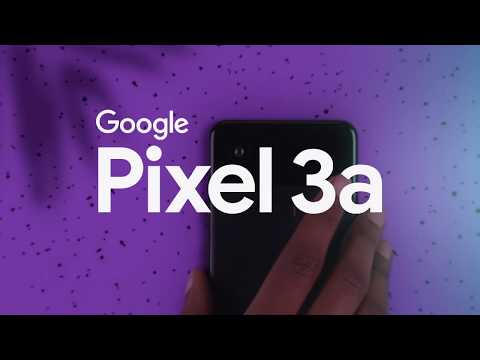
In May 2019, Google its very first mid-range Pixel phones. As part of this series, the company announced the Pixel 3a and Pixel 3a XL handsets. These two phones look the same and basically pack the same specs, save for the display and battery sizes. Both devices resemble the Pixel 3 quite a bit, but unlike the Pixel 3, they are made out of polycarbonate.
A regular, capacitive fingerprint scanner sits on the back of these two phones. You will also notice a single camera back there. That is a 12.2-megapixel camera, the same one that the company included in the Pixel 3 and Pixel 3 XL. With this camera, the company basically brought its flagship feature to mid-range devices. That camera is the main selling point of these two phones, along with their price tags.
The Pixel 3a and Pixel 3a XL ship with Android 9 Pie, and both devices are fueled by the Snapdragon 670 64-bit octa-core SoC. Both devices also include 4GB of RAM and 64GB of storage, while an 8-megapixel front-facing camera sits on both phones. The Pixel 3a features a 5.6-inch fullHD+ OLED panel. The Pixel 3a XL comes with a 6-inch fullHD+ OLED display.
Google Pixel 4 & 4 XL

Google Pixel 4 and Pixel 4 XL
Google announced two Pixel 4 flagships in October 2019, the Pixel 4 and Pixel 4 XL. Those two devices are different in size, but sport the very same design. Both are made out of metal and glass and were initially launched in three color variants. Google introduced both devices in Just Black, Clearly White, and (limited edition) Oh So Orange variants. Out of all three variants, only the Just Black model has a glossy backplate.
The Google Pixel 4 and Pixel 4 XL are less slippery than most other flagships in the market. At least they were at the time they launched. Both phones have a rather large “forehead”, which hosts various sensors. Sensors for advanced facial scanning are included. The same goes for a radar chip that enables “Motion Sense”. A front-facing camera is also included, and your regular smartphone sensors. Google did not include a fingerprint scanner on either of these two phones.
The Pixel 4 series devices are the first phones in the series to offer two rear-facing cameras. In addition to the main 12.2-megapixel camera, a 16-megapixel telephoto unit is also included. The Snapdragon 855 fuels both the Pixel 4 and Pixel 4 XL, and both phones include 6GB of RAM. Android 10 comes pre-installed on both of these devices, while both offer front-facing stereo speakers.
Google Pixel 4a & 4a 5G

Google Pixel 4a and Pixel 4a 5G
The Google Pixel 4a and 4a 5G were both announced in 2020, but not at the same time. The Pixel 4a arrived in August, while the Pixel 4a 5G dropped a month later than that. These two phones look almost the same. The only difference is in the rear camera housing, as the Pixel 4a 5G has an extra camera on the back. Both phones are made out of polycarbonate, while the Pixel 4a 5G is the largest of the two.
They do look almost identical, but their internals are somewhat different. The Pixel 4a 5G has an ultra-wide camera on the back, unlike the Pixel 4a. It also includes a more powerful processor on the inside, along with 5G connectivity. The phone has a larger display, though the refresh rate is the same, and so is the resolution. Due to its larger size, the Pixel 4a 5G does pack in a larger battery than its sibling. The rest of their specs are pretty much the same.
The Pixel 4a 5G is essentially a cross between the Pixel 4a and the Pixel 5. It actually launched back-to-back with the Pixel 5, though the Pixel 5 is a more prominent smartphone… but also a more expensive one. Both the Pixel 4a and Pixel 4a 5G came with Android 11 out of the box, and both offer stereo speakers and a rear-facing fingerprint scanner.
Google Pixel 5

Google Pixel 5
The Google Pixel 5 was announced in September 2020, as Google’s best 2020 smartphone. It shares some of its internals with the Pixel 4a 5G, but it does have some advantages. This phone is made out of metal, though it comes with a resin cover on top of it. Its bezels are uniform, which means there’s no pronounced ‘chin’ on this phone. The device has a display camera hole in the top-left corner, like its siblings.
The device is fueled by the Snapdragon 765G SoC , the same chip that fuels the Pixel 4a 5G. It comes with a 6-inch fullHD+ display with a 90Hz refresh rate. The camera setup is the same as on the Pixel 4a 5G, while the device also shipped with Android 11 out of the box. The Pixel 5 is IP68 certified for water and dust resistance, while its secondary speaker is placed under the display. A rear-facing fingerprint scanner is included on this phone.
Google Pixel 6 & 6 Pro

Google Pixel 6 and Pixel 6 Pro
The Google Pixel 6 and 6 Pro were announced in October 2021. These two phones represented Google’s return to the premium-tier smartphone space. They are considerably different than what Google offered a year before, not only when it comes to specs, but design as well. These two phones ushered in Google’s new, bold design, that is easily recognizable.
They are significant for a number of reasons. This was the first time, since 2017, that Google used a different main camera sensor. The ISOCELL GN1 from Samsung ended up being used here, replacing Sony’s aging sensor Google preferred. On top of that, both of these smartphones are equipped with the Google Tensor SoC , Google’s first-ever smartphone processor. As if that’s not enough, they are also the first smartphones from the company to include an in-display fingerprint scanner.
The two phones have high refresh rate displays, 90Hz, and 120Hz on the Pixel 6 and 6 Pro, respectively. Android 12 comes pre-installed on both phones, which brought Google’s new ‘Material You’ UI. Both phones support 30W fast wired charging and 23W wireless charging. Stereo speakers are included, and both phones are water and dust-resistant.
Google Pixel 6a

Google Pixel 6a
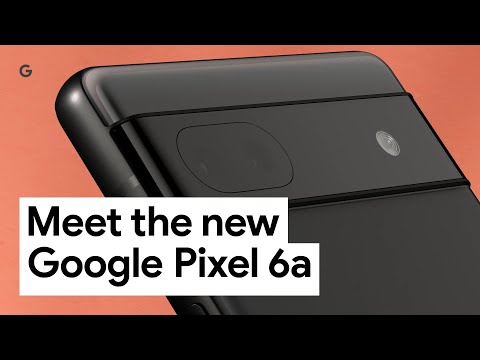
The Google Pixel 6a was announced in May 2022. It was presented during Google I/O 2022, Google’s developer’s conference. During the show, Google said that the phone wouldn’t become available straight away, but instead scheduled its release for the end of July. That being said, the Pixel 6a ushered in Google’s new design language to the Pixel A series. In other words, it borrowed the Pixel 6 design.
The Pixel 6a has a frame made out of metal and a 3D thermoformed composite back (plastic). The Google Tensor SoC fuels this smartphone, Google’s very first mobile processor, the same one that fuels the Pixel 6 and 6 Pro. Google also upped the game in the RAM and storage departments. It included LPDDR5 RAM and UFS 3.1 flash storage here, as it did in its flagships. It was using LPDDR4X RAM and UFS 2.1 flash storage before then.
A 12.2-megapixel camera is the main camera on this phone, which is a very well-known sensor for Google. The Pixel 5a 5G, the Pixel 6a’s predecessor, used it, and the same goes for a ton of other Pixel phones since 2017. The Pixel 6 and 6 Pro were the only two since 2017 that didn’t use that camera. Android 12 comes pre-installed on this smartphone, while a 4,410mAh battery sits on the inside. 18W wired charging is supported, while stereo speakers are also a part of the package.
Google Pixel 7 & 7 Pro

Google Pixel 7 and Pixel 7 Pro
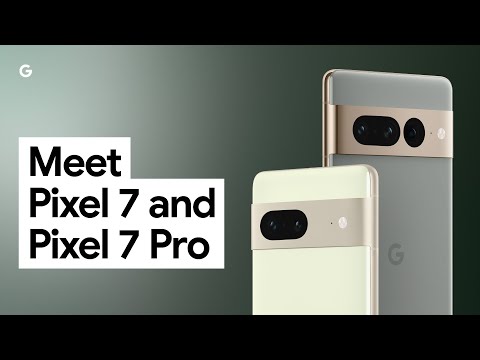
The Google Pixel 7 & Pixel 7 Pro were announced in October 2022. These two smartphones do not represent a major change in comparison to the Pixel 6 series. They actually look very similar to their predecessors, with one obvious difference. The Pixel 7 series has a piece of metal covering the rear camera visor, instead of the glass that was used in the Pixel 6 series phones.
The Pixel 7 is also a bit smaller than the Pixel 6. Both of these Pixel phones are fueled by the Tensor G2 SoC, Google’s second-gen Tensor chip. They come with a number of camera improvements, though the camera hardware remained basically the same. The Pixel 7 utilizes a 50-megapixel main camera, in addition to a 12-megapixel ultrawide unit. Both of those cameras are used by the ‘Pro’ model as well, with the addition of a 48-megapixel telephoto camera.
Both devices support wireless charging, and neither includes a charger in the box. Android 13 comes pre-installed on both phones. Some new camera features include Macro Focus on the ‘Pro’ model, while both devices offer the ‘Face Unblur’ feature as well. Those are only some of them. These two phones also feature the most recycled materials of any Pixel phone to date.
Google Pixel 7a

Google Pixel 7a
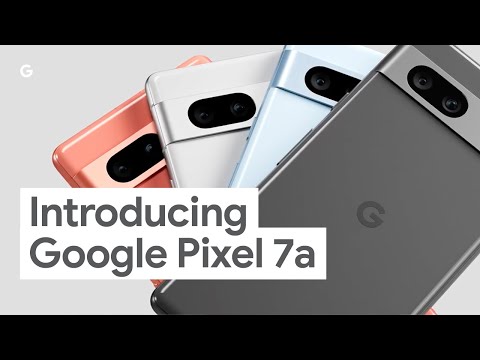
The Google Pixel 7a was announced in May 2023, during Google I/O. This is the very first ‘Pixel a’ series smartphone to offer wireless charging, and also the first one to offer a high refresh rate. The phone launched with a 90Hz fullHD+ AMOLED display, and also the most powerful processor Google had to offer at the time, the Tensor G2. That is the same SoC that Google included inside the Pixel 7 and 7 Pro.
The Pixel 7a ‘s design is based on the Pixel 7, that much is obvious. Unlike the Pixel 7, however, this handset is smaller thanks to its 6.1-inch display. It does have thicker bezels, however, and it doesn’t include a glass backplate, but a plastic one. Google also employed new cameras in this smartphone, a 64-megapixel main camera, and a 13-megapixel ultrawide one. That was an odd move by the company, as the ‘Pixel a’ series phones usually pick up sensors Google used in the past.
Google did not include a charger in the box here, which many consumers got used to at this point. The Pixel 7a launched in four color options (Charcoal, Coral, Sea, and Snow), one of which ended up being exclusive to the Google Store (Coral).
Google Pixel Fold

Google Pixel Fold
The Pixel Fold is Google’s very first foldable smartphone. It was announced in May 2023, during Google I/O. This is a book-style foldable, but it differs from Samsung’s Galaxy Z Fold lineup quite a bit. It’s a lot shorter overall, and it also leans towards the horizontal layout when unfolded, not the vertical one, like the Galaxy Z Fold phones up to this point. It is rather wide when folded at 79.5mm, but it’s also very short at the same time at 139.7mm.
This handset is quite heavy, it weighs 283 grams, and it utilizes Google’s Tensor G2 processor. There are two 120Hz displays included here, while Google also packed in 12GB of RAM. Google did a great job of making this phone stand out, with its design, it definitely looks like a member of the Pixel family. The Pixel Fold is made out of metal and glass, in case you were wondering.
Android 13 came pre-installed on the device, while two models got pushed out, one with 256GB of storage, and the other with 512GB of storage. There are two cameras on the back of the device, and one on each of its displays. Google announced the Obsidian (Black) and Porcelain (White) color variants of the device.

Google Pixel 8 & 8 Pro

Google Pixel 8 and Pixel 8 Pro
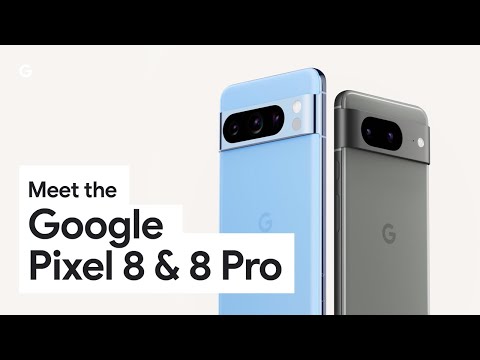
Google announced two smartphones as part of its Pixel 8 flagship series. Those devices arrived in early October 2023. The devices in question are the Google Pixel 8 and Pixel 8 Pro . They look very similar but are different in terms of size. The Pixel 8 is smaller than the Pixel 7, and it has two cameras on the back, unlike the Pixel 8 Pro. It also has a glossy glass backplate, unlike its ‘Pro’ sibling.
There are, of course, some differences in terms of hardware as well. The Pixel 8 Pro comes with a sharper and larger display, not to mention that it offers more RAM than its sibling. Both smartphones are fueled by the Google Tensor G3 processor, and both offer LPDDR5X RAM and UFS 3.1 flash storage. The Pixel 8 supports 27W wired and 18W wireless charging, while the Pixel 8 Pro offers 30W wired, and 23W wireless charging. Reverse wireless charging is on offer on both phones.
The Pixel 8 is equipped with a 50-megapixel main camera and a 12-megapixel ultrawide unit. The Pixel 8 Pro ups the ante with a 50-megapixel main unit, a 48-megapixel ultrawide camera, and a 48-megapixel telephoto camera (5x optical zoom). Android 14 comes pre-installed on both phones with a bevy of AI features that Google is offering. Some of them are exclusive to these two phones, and many are camera-related.
Google Pixel 8a

Google Pixel 8a
Google announced the Pixel 8a in May 2024. It arrived as the company’s new budget offering and a direct successor to the Pixel 7a. It actually does look very similar to the Pixel 8a, save for the corners of the phone, which are considerably more rounded this time around. The phone still has the trademark camera visor on the back, which is covered by metal, and it’s made out of metal and plastic.
This phone launched with some improvements compared to its predecessor. It includes a 120Hz display refresh rate, not to mention the fact that its display is considerably brighter. Those are actually the main improvements, but very notable ones. The Pixel 8a also comes with a new chip, the Google Tensor G3, the same processor that fuels the Pixel 8 and Pixel 8 Pro. The phone is also IP67 certified for water and dust resistance.
The camera setup remains unchanged compared to the Pixel 7a. There is still a 64-megapixel main camera on the back, backed by a 13-megapixel ultrawide unit. A 4,492mAh battery is included here, while the phone supports both wired and wireless charging. One thing to note is that a charger is not included in the package here. That is something we’re used to when it comes to Google’s Pixel phones.
Google Pixel 9 series

Google Pixel 9 series
Google announced the Pixel 9 series in August 2024. The company opted to host a press event a lot earlier than it usually would. Google usually announces new Pixel flagships in October each year. The company decided to do it about 2 months earlier in 2024, and for the first time ever the company announced four Pixel phones at the same time. With that being said, one of them is foldable, and all of them ship with Android 14, not Android 15 .
The devices that were announced are the Google Pixel 9 , Pixel 9 Pro , Pixel 9 Pro XL , and Pixel 9 Pro Fold . All of them are fueled by the Tensor G4, Google’a latest processor. All of them use LPDDR5X RAM and UFS 3.1 flash storage, though have different RAM and storage counts. The Pixel 9 Pro and Pixel 9 Pro XL are basically the same devices except for the display size and battery capacity. Google opted to announce two sizes of its new flagship smartphone. They have the exact same camera setups.
The Google Pixel 9 Pro Fold is a completely different device compared to its predecessor, the Pixel Fold. It’s narrower and taller now, while being a lot thinner too… and a bit lighter. It’s still heavier than basically all of its competitors for some reason. That phone does come with a number of improvements compared to the original. All four smartphones are packed with AI features, of course.
Google Pixel 9a

Google Pixel 9a
The Google Pixel 9a was announced in March 2025. It does look notably different than its predecessor, as Google decided to ditch the camera bar on the back. Now you get a pill-shaped cutout for two cameras that does not protrude. The phone has flat front and back sides, while its frame is also flat around the phone. The bezels are uniform, but they’re not exactly thin. A display camera hole is still present and centered up top.
Google’s Tensor G4 4nm processor fuels this phone, while the company included 8GB of RAM on the inside. A 6.3-inch fullHD+ pOLED display is in use, and it supports a 120Hz refresh rate. Android 15 comes pre-installed here, while a rather large 5,100mAh battery is included on the inside. The phone does not support particularly fast charging, though, at 23W via a wire, and 7.5W wirelessly.
The Pixel 9a comes in four colors , Iris, Obsidian, Peony, and Porcelain. It has two cameras on the back, main and ultrawide units. The camera sensor in the main camera is smaller than on its predecessor, which is a bit weird. The Google Pixel 9a is coming to 32 countries all over the world.
Google Pixel 10 series

Google Pixel 10 series
The Google Pixel 10 series was announced in August 2025. Google once again announced four smartphones, and this time around it didn’t really make any (significant) design changes. Once again we’re getting the vanilla Pixel 10 model, which is compact, as is the Pixel 10 Pro . The Google Pixel 10 Pro XL is the larger model of the ‘Pro’ variant, while the Pixel 10 Pro Fold is the company’s new foldable.
The Google Tensor G5 chip, a new 3nm processor, fuels all of these phones. That is the first TSMC-made Tensor chip to date. Google also upgraded from UFS 3.1 to UFS 4.0 storage, at least when it comes to the ‘Pro’ models. The camera hardware stayed mostly the same, well, with the exception of the Pixel 10. That phone did get a third camera, a telephoto one, but its main camera has been downgraded.
The two smallest phones include a 6.3-inch display, while the Pixel 10 Pro XL has a 6.8-inch panel. The Google Pixel 10 Pro Fold has an 8-inch main panel and a 6.4-inch cover display. All of those displays have a 120Hz refresh rate, and all of them are OLED displays. Google did increase battery capacities in these phones, while a number of other improvements have been made, like the addition of magnets for full-fledged Qi2 charging.
The Pixel has never been, and likely never will be a top seller in the smartphone world. And that might be by design, as Google does not want to outsell Samsung and force them to turn to Tizen for their phones. But the Pixel has always been the phone for enthusiasts. Which explains why readers of AndroidHeadlines love the Pixel (and OnePlus) so much. Because it’s Android, the way Google envisions it.
Every year, when we review the latest Pixel smartphone, we say something about how it is so good, but it lets us down in one or two areas. And that is kind of true again this year. The silver-lining though, the Pixel 5 is not the same price as other flagships. It is just $699 in the US (or €599 in Europe, because the US has to pay the Verizon 5G tax). That sounds like a good price, but the Pixel 5 is now entering a new segment of the market that has recently become very competitive. With the launch of the Samsung Galaxy S20 FE ($699), OnePlus 8T ($749) and the iPhone 12 ($799, iPhone 12 Mini at $699).
So does the Pixel 5 do enough to stand out? Does it do enough to get you to spend your hard-earned cash on this new smartphone? Let’s find out in our pixel 5 review.

Google Pixel 5 Design
Pixel 5’s design isn’t boring
Many will disagree, but I don’t think the design of the Pixel 5 is boring at all. I quite like it. It’s utilitarian. The Pixel 5 is not flashy, but it does get the job done. Giving us a somewhat small, 6-inch display with minimal bezels, and a small camera bump on the back. In fact, the camera bump is almost non-existent. And after using phones like the Galaxy Note 20 Ultra and Galaxy Z Fold 2 recently, I welcome this much smaller camera bump.
We can’t talk design, and not talk about that back plate. So the Pixel 5 is made out of 70% recycled aluminum. That’s good for the environment and all, but what is this finish on the aluminum unibody? Well, it’s paint, and it’s not bad actually. I quite like it. The back has a quite interesting feel in the hand, but most importantly, it adds some grip. Metal and glass phones have been slippery for years, so this is a welcome change, in my opinion. On top of that, you can still see fingerprints on metal phones – depending on the metal. And with this backing, no fingerprints at all. That’s something I like to see.
But there’s more to the back plate than just the aluminum and paint. How did Google get wireless charging working on the Pixel 5, with an aluminum back plate? Well, Google did a Google thing and cut out a portion of the back plate for the wireless charging coils. If you tap your fingernail on the back of the phone, you can tell exactly where that “hole” is, for the wireless charging. It’s in the center of the back, which makes it easy to line up for wireless charging.


With the back being aluminum, the Pixel 5’s fingerprint sensor is recessed a little bit. Making it easier to find it, unlike with the Pixel 4a and 4a 5G. That is likely due to the fact that metal is thicker than plastic (or polycarbonate). And thank goodness Google ditched face recognition for a fingerprint sensor this year. With everyone (with common sense, at least) wearing a mask.
In the hand, the Pixel 5 feels compact, it feels comfortable. This is one of the few phones this year, that I haven’t been able to put down for a long period of time, simply because I love the feel of this phone. And the fact that it can actually fit in one hand. Yeah, big phones are nice. Especially for watching YouTube. But if you’re trying to fire off an email while walking to your next appointment, it’s tough. With the Pixel 5, you can type with one hand. And even navigate through the OS with one hand very easily.

Google Pixel 5: Display
This display is vibrant, and I don’t even miss QHD resolution
Let’s jump back to the display. It’s a FHD+ OLED display that does 90Hz. It looks amazing. Many people are worried about it because it is not QHD+ resolution this year, but don’t be.
A lot of phones that are QHD+ ship at FHD+ by default. So you likely wouldn’t notice the difference. And for someone like me that uses almost every flagship phone to come out this year, I haven’t noticed the difference either. And in fact, prefer FHD+ over the increased battery life that it’ll provide.
The screen is surprisingly bright. I was actually very surprised with how well I could see this display when outside in direct sunlight. Much brighter than the Pixel 4 XL and previous Pixels were. Normally, only Samsung is able to hit brightness like this.
It’s a very vibrant panel, that looks incredible when watching Netflix and YouTube. Let’s not forget that the Pixel 5 is able to do HDR playback on Netflix. So it does look really incredible. And I have to admit, I watched a lot of Netflix during the review process of the Pixel 5.
Pixel 5 has a display that looks incredible, because of the minimal bezels and hole-punch camera. I enjoyed using the Pixel 5 much more than the Pixel 3 XL and Pixel 4 XL before them, because of that. The Pixel 3 XL had that bath tub-like notch that was just insane. While the Pixel 4 XL ditched the notch for a thicker forehead that was not symmetrical and just looked… bad.
I really like this display, and regardless of what DisplayMate says, this is a good display on a 2020 smartphone.
Performance can be a mixed bag
Performance is a bit of a mixed bag on the Pixel 5, and that’s not entire the Snapdragon 765G’s fault. You see, the Snapdragon 765G is a perfectly capable chipset, I’ve used it on a number of smartphones released this year, and it’s been pretty remarkable. And on the Pixel 5, it’s done very well. Haven’t noticed any slowdowns or even apps being pushed out of memory in my day-to-day usage.
However, where things change a bit is when it comes to gaming and camera performance. Let’s start with Gaming.
This is not the best chipset on the market, so the gaming experience is going to suffer a little bit on the Pixel 5. It can play many games quite well, without any issues whatsoever. Just don’t expect it to offer up some incredible graphics performance, as it does have a lower-end GPU included.
And when it comes to the camera, Google ditched the Pixel Visual Core on the Pixel 5. That is Google’s own ISP that would process images after you take them. That is done on the chipset now, and it’s a tad slower. In my experience during this Pixel 5 review, it hasn’t been super slow, but it does take another couple of seconds. Of course, with images that need more processing, it will take longer. Think Astrophotography, Portrait and Night Sight pictures. It’s unclear why Google ditched the Visual Core, but let’s hope it comes back on the Pixel 6 next year.
Android 11 is mighty sweet on the Pixel 5
We’ve already talked a lot about Android 11, so we won’t get too into detail about it in this Pixel 5 review. But it runs really great on this hardware.
Outside of regular Android 11 , Google has made a few changes to Android for Pixel devices. With the majority of them being in the Pixel Experience Launcher.
Now when you long-press on the home screen and go into “Styles & Wallpapers” (you can also get here from the settings), you are greeted with a new wallpaper picker. I actually like this new wallpaper picker much more. As you can see the entire home screen, and what it will look like before applying it. You also see smaller thumbnails for each category of wallpapers on the Pixel 5. Unfortunately, that Pixel 4a live wallpaper is not available here – you can of course, sideload it though. Pixel 5 does have a couple of its own live wallpapers that look mighty sweet too. Like the “Stepping Stones” one, which is actually the default wallpaper. As you tilt your phone, the rocks tilt on the screen. Which is pretty neat.
This menu gives you access to change the wallpaper, style and now the grid. Though the grid portion could use some work, in my opinion. It allows you to choose from default, 4×4, 3×3, and 2×2. And obviously the less icons on the screen, the bigger they get. Though the “Default” one should say 5×5, to be in line with the others here. But it would be nice to get it 6×6, especially for those that use smaller display settings.
There are also some changes to the camera UI, but we’ll cover that a bit later. Otherwise, Android 11 is the same as on other devices. With bubbles for conversations, native screen recording, the new media controls and more.


Pixel is finally a battery life king
And I don’t use that term lightly. The Pixel smartphones have always been rather terrible on battery. The Pixel 2 XL was perhaps the best, and even then it was not that great. It all came to a head last year with the Pixel 4 series, where the battery couldn’t even last a full day. This year, Google went in a totally opposite direction. And during this review of the Pixel 5, I have consistently made it a day and a half (or longer) on a single charge. That’s not something that I can say often.
On the Pixel 5, I’ve been able to hit seven and a half hours of screen on time without any trouble. And that was with it on 4G LTE/5G for more than half of the day. Also without using any battery saving features, or turning things off like the 90Hz display. That is rather impressive, and I’d say the best I’ve gotten on a smartphone in 2020. Which is saying something.
So how exactly did Google hit its stride in battery life on the Pixel 5? Well there are four choices that attributed to the Pixel 5 having this epic battery life. Firstly, a larger battery size. We’ll compare it to the smaller Pixel 4, since it’s closer to that physical size than the Pixel 4 XL. Pixel 4 had a 2800mAh capacity battery. That means the Pixel 5 is more than 40% larger. That’s a big jump in battery size in a single year.
The other choices Google made to improve battery life were, a smaller and lower-resolution display (FHD+ instead of QHD+), the very power-efficient Snapdragon 765G, and the changes to Adaptive Battery. Though the bigger culprits here are hardware. The Snapdragon 765G is super battery efficient, compared to the Snapdragon 865. Which is why this performs better than the Galaxy S20. Which has the same size battery and slightly larger display.


During the week or so I’ve had the Pixel 5, and have been writing this review, this phone has been incredible on battery life. The Pixel 4 XL would struggle to end the day above 10%, and that was with much lighter usage. So yes, I am very impressed with Pixel 5 battery life. And once Adaptive Battery really starts to set in, we should see even better battery life out of the Pixel 5.
Google also added reverse wireless charging on the Pixel 5. This is a feature that seems to be gaining popularity now, but I’m still not on-board with it. Basically you are transferring power from your phone to another phone or your Pixel Buds (or anything that can do wireless charging). It’s slow, and takes juice away from your phone. Maybe if I was headed to the gym and my Pixel Buds were low on battery, it would be good in a pinch, but I’d rather just plug them into the charger in the car. They’ll get more juice, and my Pixel 5 won’t be losing battery. Anyways, it’s available here and works as advertised.
There’s regular old wireless charging here too, and it has seen an increase in speed to 12W. Not much faster, in fact it is 1W faster than Pixel 4 series last year.
With the Pixel 5, Google is still giving us 18W charging speeds. It’s time to step it up Google. Other companies are doing 25W, 45W and even 65W over USB-C PD (which is the correct way to do it). Now it’s time for Pixel to follow suite. 18W is plenty fast if you’re charging overnight, or even during the day, as the Pixel 5 does charge in about an hour and a half. But faster would always be better – as long as it’s safe.

Google Pixel 5: Camera
Great camera, but it’s starting to show its age
My favorite feature of any (and every) Pixel, has been its camera. It just works. And it provides some incredible images. But Google needs to upgrade the camera sensor in the Pixel 5, it’s the same one they’ve been using since the Pixel 3. So it’s definitely showing its age now. I’ve already talked about this in an opinion piece I published last week.
The back has a 12.2-megapixel sensor, and a 16-megapixel ultra-wide sensor. Thankfully this year Google decided to swap out the telephoto for an ultra-wide. After hearing the pleas from customers and the haters. While the front still has the same 8-megapixel front-facing sensor. I really do miss that ultra-wide sensor that was on the front of the Pixel 3 series. That was such a good addition, shame it only existed for one generation of Pixel.
Google also redesigned the camera app, a little bit. And this is mostly due to the fact that an ultra-wide sensor was added. The changes here, you likely wouldn’t notice, unless you were using an older Pixel side-by-side with this new Pixel 5. But the menu at the bottom to switch modes, has changed, It is now gray with white text instead of white with black text for the selected mode. The Shutter button has also changed. It now has the button with a white ring around it. The Shutter button show the Night Sight icon when there’s not a lot of light. So Night Sight is automatic now.
Above the shutter button, is a new setting for zoom levels. Default is 1x of course, but you can go out to 0.6x and use the ultra-wide or zoom in to 2x. You can still zoom in up to 7x, it’s just not one of the buttons there (pinch to zoom in the rest of the way). Some settings have moved around too. For example, there is a new “Composition” section that has the Framing hints and Grid Type settings available.
Like I said, the changes to the camera app are pretty subtle, but they are there. And honestly, I feel like it makes the camera app even easier to use.
How well does portrait lighting work?
One of the new features this year for the camera is portrait lighting. Interestingly, you cannot apply these while you’re taking the photo. Instead, you apply them afterwards, but you do need to take it in Portrait mode.
After you’ve taken a photo, tap on it in the viewfinder to view it like you normally would. Then you can tap on the settings button at the bottom of the picture. Now swipe over to “Adjust” then over to “portrait light”. There’s not a lot of options there. But you can adjust how the lighting looks. The default is 50, so you can raise or lower it if you wish. You can also drag the light to anywhere on the picture you’d like. It does give a rather nice effect.
Though, as someone that doesn’t take a lot of selfies, I can’t say whether or not this is a game-changer or not. But it is cool. And it works on portrait mode photos from other phones, if you edit them in Google Photos.
How good do the photos look?
Pictures look great on the Pixel 5. If you’ve used any of the previous Pixels, you know what to expect. Though something we did notice while doing our review of the Pixel 5, is that the pictures do seem to have a warmer tint this year. Normally, Google runs closer to “natural” for the tint on its pictures. But a lot of the images we’ve shot, have a warmer tint this year. And that’s not just something we’ve seen, other reviewers have reported the same.
When it comes to Night Sight, I think Google can do some improvements here. It’s still insane that this works as well as it does. But depending on the light, there might be some grainy-ness. Part of that is likely due to the 12-megapixel sensor too. And doing Portrait Mode in Night Sight is where you’ll really see that grainy-ness.
Portrait Mode is just as good as ever. I have noticed slight improvements in its edge-detection. It’s not perfect, but it is improving. Normally, it would cut off the corner of my glasses, if I didn’t look straight at the camera. That doesn’t seem to always be the case now, it was with Pixel 4 XL. It happens from time-to-time, but not every time.
You can check out our Flickr gallery below to see the pictures we’ve taken with the Pixel 5. These were all shot on auto mode, and the only edits were made to portrait shots by using the portrait lighting mode. Noting else has been done here.
Pixel 5 Camera Samples - Flickr
Has video quality improved?
The biggest complaint with the Pixel has always been video. It didn’t seem like Google was taking it seriously. But it is, with the Pixel 5. Google added a few features here. Like Cinematic Pan and 4K60 video recording.
Since I’m not a YouTuber, and we don’t do a lot of video here at Android Headlines, it’s hard to really gauge how good the Cinematic Pan feature is. But it does seem to work really well. It’s kind of like having a gimbal built-in to your phone. But you do still need to take your time with it, so the shot doesn’t look super shaky. The locked pan mode works well too, unless, again, you are moving your phone a lot further than you should be.
The stabilization needed for modes like this is pretty incredible, and even more incredible that Google got this built into the Pixel 5.

Google Pixel 5
Don’t buy the Pixel 5 for 5G
You may have heard that the Pixel 5 has 5G (as well as the Pixel 4a 5G). But that is not the reason to buy this phone. In 2020, we recommend people not to buy a phone solely for 5G. If you’re buying a new phone, it likely has 5G, but that shouldn’t be the reason you buy that particular phone. And that’s still the case for the Pixel 5.
Why? Well because 5G just isn’t ready. And most phones that you buy today, won’t work on a finished 5G network. For instance Verizon 5G phones do mmWave and not Sub-6. And non-Verizon phones do Sub-6 and not mmWave. Though there are some that do both – like the Pixel 5. And you’re going to need both if you plan on taking advantage of 5G in the coming year or two. The Pixel 5 does support both mmWave and Sub-6. But as far as we can tell, it only supports Verizon’s mmWave. So AT&T and T-Mobile customers will be out of luck when their flavors of mmWave launch.
Confusing right? Never mind the fact that most people can’t access 5G.
For instance, Verizon launched its “nationwide 5G” network this week. Which is its Sub-6 network. It shows that I should have it everywhere I go in Ann Arbor, with mmWave downtown. Yet I rarely see it pop up on the Pixel 5. And when it’s Sub-6 5G, it’s actually slower than 4G LTE. That is a similar case for AT&T and T-Mobile too.
So if you’re buying the Pixel 5, don’t even think about 5G. You probably won’t be able to use it.

Google Pixel 5: Should I buy it?
Should I buy the Pixel 5?
The case for buying the Pixel 5 is a tricky one this year. Mainly because it’s cheaper, and because it has a lot of competition in this price range – Galaxy S20 FE, OnePlus 8T and iPhone 12/Mini. And the majority of those have better specs than the Pixel 5.
However, where the Pixel always wins out is in software experience and with the camera. If you’re one that prefers stock Android, and a great camera that doesn’t have a lot of bells and whistles, then the Pixel 5 is a great choice. But if you’re a gamer, then it’s not a good option for you. The OnePlus 8T will be better, with the Snapdragon 865 and 12GB of RAM.
There’s a lot of really great $700 smartphones right now, and I love it. Hopefully this trend continues, and possibly drives prices even lower.
