Samsung’s Galaxy XR headset launched recently, and while it does come in well under the price of Apple’s Vision Pro headset, it’s still expensive at $1,799.99, so you have to wonder if it’s repairable. Tech these days isn’t cheap, so repairing it yourself can be a good way to save money in the event that something breaks and needs to be replaced. The only things that hold people back from this pursuit are the equipment that’s potentially needed and how repairable the device actually is.
The folks over at iFixit have taken to pulling Samsung’s Galaxy XR headset apart to see how repairable it is for the average person, and it turns out, it’s the most repairable XR headset on the market so far. It likely won’t stay like this forever. Somewhere down the line, there’s a good chance some company will see how repairable Samsung’s headset is and improve on that where necessary. For now, though, the Galaxy XR is the easiest to repair, and that bodes well for consumers who are considering this as their headset of choice.
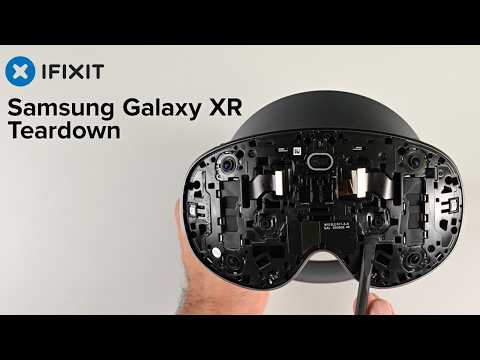
The Samsung Galaxy XR is very easily repairable, but Samsung doesn’t want you to repair it
During iFixit’s teardown , it found that the headset actually had quite a few design elements that allow it to be repaired with little effort. For instance, Samsung is using all Philips head screws throughout the headset. With this being the case, you won’t be required to get specialized tools to unscrew anything. You can find a Phillips head screwdriver at essentially any store that sells tools. So, that’s a big win. The rest of the headset is pretty easy to take apart as well, although it will take time. Samsung also makes it relatively easy to replace the battery pack. The face cushion and light seals can be removed easily as well, as they’re magnetic.
Where Samsung falters is with its resistance to consumers fixing their own hardware. On the inside, you’ll find a Void If Tampered sticker , which would void the warranty on the headset if you mess with it and have to send it back to Samsung. The good news, sort of, is that this is illegal in the US per the rules of the Federal Trade Commission. So, a consumer who was met with pushback from Samsung might have some recourse here. Still, it’s a shame to see this kind of practice from such a big brand.
